


 Gift Box
 Almonds
 Cashew Nuts
 Pistachio
 Pine Nuts Chilgoza
 Walnuts
 Dried Fig
 Apricot
 Dates
 Peanuts
 Walnut Kernels


Dry Fruit Jalebi Recipe: Crisp Syrup Sweet with Nuts
In short: Jalebi is the crisp fried syrup sweet: maida batter piped into spirals, fried in desi ghee until crisp and golden, then soaked in warm chashni and topped with pista, badam, kaju, kishmish and zafran. One batch makes 20 jalebis and the dry-fruit garnish costs Rs 699 — about Rs 35 a jalebi. The maida, cheeni and desi ghee come from the bazaar, not from this shop, so they are not costed here. It is the sweet for winter evenings and shaadi tables, served warm, straight from the chashni.
Every Pakistani winter has a fried sweet, and they are easy to confuse, so let us be clear from the first line. Gulab jamun is a khoya ball, fried and soaked in chashni — that is the gulab jamun from 18 November, and this article is not that recipe. This article is the jalebi: maida batter, piped into spirals, fried crisp in desi ghee, and soaked in warm chashni until it is sweet all the way through. No khoya, no chenna, no setting in a tray — batter, fire, syrup, and nothing else. If you want the jamun, make the jamun. If you want the crisp, golden spirals of a winter jalebi, make this one.
Jalebi is the first fried syrup sweet in this program, and it earns the place. Every other sweet so far has been cooked in milk, set in a tray, or rolled into a laddu — the jalebi is the one that fries. In the winter kitchen, jalebi is the sweet of the cold evening and the shaadi table — it goes onto the dawat table warm from the karahi, into the boxes that travel to relatives, and onto the plate beside the doodh patti — and this recipe puts the crisp spiral at the centre and lets the chashni do the rest, soaking the fried batter until the whole karahi smells of ghee, elaichi and zafran.
One thing must be said plainly at the start, because it matters more than any recipe detail. Maida, cheeni and desi ghee are not sold on this shop. Maida is a bazaar item, bought from the kiryana store; cheeni is a bazaar item too; and desi ghee is a bazaar item as well. This article does not cost any of them, because the shop does not sell them and their prices vary by bazaar. The cost in this article is the garnish only — the pista, badam, kaju, kishmish, elaichi and zafran that go on top — and every one of those is costed below at the live price. This is the same rule as the 18 November gulab jamun piece, where the khoya was bazaar and only the stuffing was costed.
The Ingredients: Maida Batter, Chashni, and the Dry-Fruit Garnish
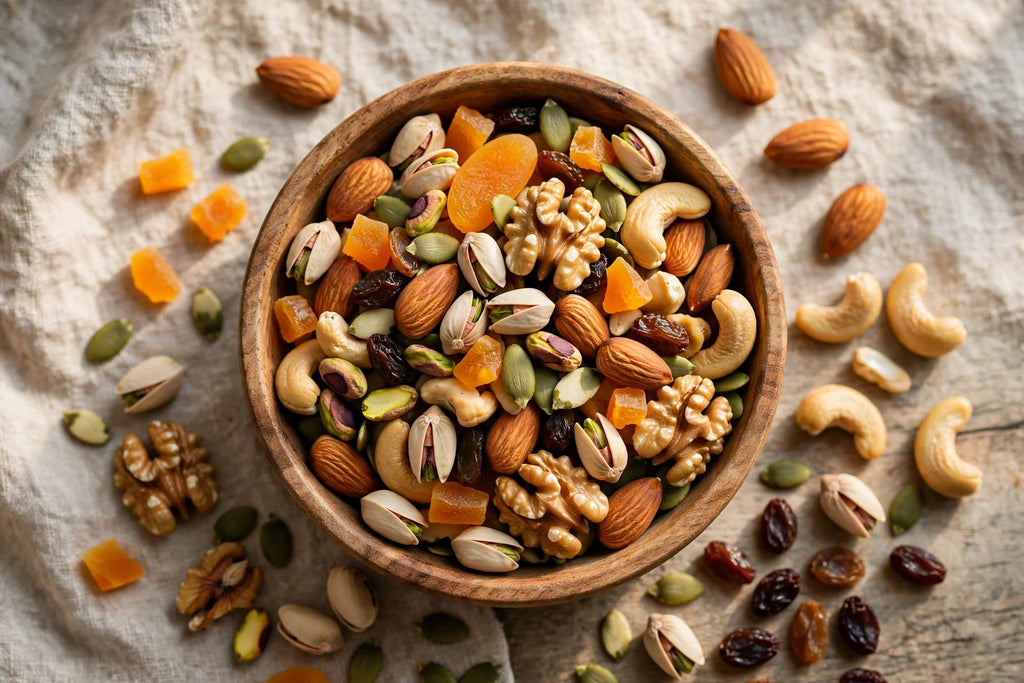
One batch — 20 jalebis — needs maida for the batter, cheeni for the chashni, desi ghee for frying, 25g pista giri, 25g American badam, 25g raw kaju, 25g desi kishmish, 2g green elaichi, and a pinch of zafran.
Three of these ingredients come from the bazaar, and it matters to say so plainly. Maida, cheeni and desi ghee are bazaar-bought — this shop does not sell any of them — and none of them is costed in this article, because their prices vary by bazaar and most houses already keep them. Everything else — the pista, badam, kaju, kishmish, elaichi and zafran — comes from the shop, and every one of those is costed below at the live price.
Each ingredient has a job. The maida is the hero: fermented into a batter, piped into spirals, it is the body of the sweet, and it is what makes the jalebi crisp in every bite. The chashni is the soak: cheeni and water cooked with elaichi until it is just thick enough to coat a spoon, it is what the fried spirals drink, and it is what makes the jalebi a jalebi instead of a fried snack. The desi ghee is the medium: it fries the spirals crisp and golden, and it gives the jalebi its richness and its winter warmth. The pista gives the colour and the flavour: chopped green slivers on top, unmistakably pista. The badam gives the crunch — slivered, it is the bite you notice in every jalebi. The kaju gives the softness: chopped, it turns tender in the warm syrup. The kishmish gives the sweetness — small sweet pockets in the dessert, the only fruit in the dish. The elaichi gives the fragrance: ground green cardamom, folded into the chashni, it is the smell that fills the house when the dessert is ready. And the zafran gives the gold: a pinch soaked in warm water, it is the colour and the fragrance that tells the guest this is a shaadi sweet.
Use plain maida for this sweet, and ferment the batter overnight. Maida fermented with a spoonful of dahi turns into a batter that fries crisp and soaks sweet — the fermentation is what gives the jalebi its tang, and its crispness. A batter made and fried in the same hour makes jalebis that are soft instead of crisp, and soft jalebis are the one failure a jalebi cannot hide. If the house does not keep dahi, the batter still ferments on its own overnight in a warm kitchen — it only takes a little longer.
The Method: Ferment, Pipe, Fry, Soak in Chashni
Ferment the batter overnight, pipe it into spirals in hot desi ghee, fry until crisp and golden, then soak the spirals in warm chashni with the dry fruits until they are sweet all the way through — then serve warm.
Start with the batter, because the batter sets the pace of the whole recipe. Mix the maida with water and a spoonful of dahi into a smooth, thick batter — thick enough to hold its shape when piped, thin enough to flow from the nozzle — and leave it covered in a warm place overnight. The batter is ready when it has risen slightly and smells faintly sour, and when a dropped spoonful holds its shape for a moment before settling. A batter that is too thin makes flat jalebis that never crisp; a batter that is too thick makes jalebis that stay raw in the middle. The right batter flows like thick cream and holds a spiral.
Now fry the spirals. Warm desi ghee in a wide, flat karahi over a medium flame, and pipe the batter into spirals — start from the centre and work outward, two turns and a tail — straight into the hot ghee. Fry until the spirals are crisp and golden, turning them once so both sides colour evenly. The spirals are done when they are golden all over and crisp to the touch, and when they hold their shape when lifted. Lift them out with a slotted spoon, let the ghee drip off for a moment, and slide them straight into the warm chashni — the chashni must be warm, not hot, so the spirals drink it slowly instead of going soft.
Now the soak. Let the spirals sit in the chashni for two minutes — no longer, or they go soft — then lift them out onto a plate and scatter the chopped pista, badam, kaju and kishmish on top. The chashni is made by cooking cheeni and water with ground elaichi and the soaked zafran until it coats a spoon — one thread, no more — and it is kept warm while the spirals fry, so every batch goes into warm syrup. Serve the jalebis warm, in small plates, with a spoonful of chashni and a scatter of dry fruits on top of each serving.
When to Serve It: Winter Evenings and Shaadi Tables
The jalebi's home is the cold winter evening and the shaadi table — anywhere a warm, crisp, syrup sweet is what the evening asks for.
For winter evenings, jalebi is the sweet that rewards a slow afternoon. The batter ferments overnight, the spirals fry in the evening, and the house eats them warm, with a cup of doodh patti on the side. Two jalebis per person is enough for most, because the sweet is rich and filling, and it stays with you through the night — and that is the point of a winter sweet, that it warms you and holds you until the morning.
For shaadi tables, jalebi is the sweet that says the house has spent properly. It is the sweet the guests expect after the meal, warm from the karahi, crisp on the plate, and it is the sweet the house fries fresh so the evening itself is the cooking. Serve it in small plates at the end of the meal, with a spoonful of chashni and a scatter of pista on top of each serving, and it will be the sweet the guests remember. This is also the sweet to make when the family is deciding between the jalebi and the gulab jamun for a shaadi order: the jamun is soft, the jalebi is crisp, and a house that serves both has covered every guest.
The Costed Garnish: Rs 35 a Jalebi
Every price is the shop's own live price on 19 November 2026. The garnish is costed by the amount used, from the verified pack price. Maida, cheeni and desi ghee are bazaar-bought and not costed here — the shop does not sell them:
| Ingredient (Shopify store) | Pack price | Used in batch | Batch cost |
|---|---|---|---|
| Pista Giri | 250g Rs 2,750 | 25g | Rs 275 |
| American Badam | 250g Rs 1,100 | 25g | Rs 110 |
| Raw Kaju | 250g Rs 1,400 | 25g | Rs 140 |
| Desi Kishmish | 250g Rs 500 | 25g | Rs 50 |
| Green Elaichi | 250g Rs 4,200 | 2g | Rs 34 |
| Zafran | 2g Rs 1,800 | a pinch (~0.1g) | Rs 90 |
| Total garnish — one batch (20 jalebis) | — | — | Rs 699 |
| Per jalebi (20 per batch) | — | — | ~Rs 35 |
Rs 699 is the cost of the shop-bought garnish for one batch of 20 jalebis — about Rs 35 each. The maida, cheeni and desi ghee are bazaar-bought and not in that total, because the shop does not sell them. The pantry to start — one pack of each shop ingredient — costs Rs 11,750: pista giri 250g Rs 2,750, badam 250g Rs 1,100, kaju 250g Rs 1,400, kishmish 250g Rs 500, elaichi 250g Rs 4,200 and zafran 2g Rs 1,800. From that pantry you make the first batch and still have pista, badam, kaju, kishmish, elaichi and zafran left for many more batches — the pista pack covers ten batches, and the elaichi and zafran packs last for months. A half batch, 10 jalebis, costs Rs 350 in shop garnish and is the right size for a small family evening, or for a first try.
Variations: No-Zafran, Pista-Heavy, and the Kesar Chashni
The jalebi is the classic, but three variations are worth knowing, and all of them keep the recipe a one-line change.
No-zafran. Leave the zafran out and the garnish costs Rs 609, about Rs 30 a jalebi. The sweet loses its golden colour, but it keeps its crispness and its flavour, and the saving is real — zafran is Rs 1,800 for 2g. This is the version to make when the sweet is for the family and not for the guests.
Pista-heavy. Double the pista to 50g and the garnish costs Rs 974, about Rs 49 a jalebi. The sweet turns greener on top, with pista in every bite, and it is the version that looks most like the halwai's own jalebi. This is the version to make when the guests matter and the pista is the point.
Kesar chashni. Soak the zafran in warm water for an hour before it goes into the chashni, instead of stirring it in at the end, and the syrup turns a deeper gold and carries the zafran all the way through. The cost is the same — a pinch is a pinch — but the flavour is stronger, and the sweet smells of kesar before the plate even reaches the table. This is the version to make when the house keeps zafran and wants the guest to know it.
Do not rush the ferment, and do not soak the spirals too long. Batter fried the same hour makes soft jalebis, and spirals left in the chashni for more than two minutes go soft too, and both mistakes turn a crisp sweet into a failed one. Ferment the batter overnight, fry until crisp and golden, and soak for two minutes only — that is the whole secret of a good jalebi, and it is a secret worth keeping.
Keeping Jalebi, Making It Ahead
Jalebi keeps for a day in a covered dabba, at room temperature, and it is best eaten warm, within hours of frying, while the spirals are still crisp and the chashni is still fresh. Do not put jalebis in the fridge — the cold makes them go soft and the chashni turns sticky. To reheat, warm the jalebis for a minute in a hot oven or on a dry tawa, and they crisp up again — a reheated jalebi is nearly as good as a fresh one, if the heat is dry and the time is short.
The batter can be fermented the night before, and the chashni can be made the morning of, so the evening is only the frying: pipe, fry, soak, serve. Do not fry the jalebis hours ahead and leave them sitting in chashni — they go soft, and soft jalebis are the one failure this sweet cannot hide. If the sweet is for a shaadi, fry it fresh and serve it warm; a jalebi made fresh is worth more than a jalebi made ahead.
How is jalebi different from gulab jamun?
Gulab jamun is a khoya ball, fried and soaked in chashni — the jamun from 18 November, soft all the way through. Jalebi is maida batter, piped into spirals, fried crisp in desi ghee, and soaked in warm chashni until it is sweet all the way through. One is soft, the other is crisp — same syrup family, different dish.
How much does the dry-fruit garnish cost per jalebi?
Rs 699 in shop-bought garnish for a batch of 20 jalebis, about Rs 35 each — pista giri 25g Rs 275, badam 25g Rs 110, kaju 25g Rs 140, kishmish 25g Rs 50, elaichi 2g Rs 34 and a pinch of zafran Rs 90. Maida, cheeni and desi ghee are bazaar-bought and not in that total.
Why did my jalebis go soft?
Two reasons, and both are in the method: the batter was not fermented long enough, so the spirals never crisped; or the spirals sat in the chashni for more than two minutes, so they drank too much syrup and went soft. Ferment the batter overnight, fry until crisp and golden, and soak for two minutes only — then lift them out.
Can I make jalebi ahead?
Jalebi keeps for a day in a covered dabba at room temperature, and it is best eaten warm within hours of frying. Do not put jalebis in the fridge — the cold makes them go soft. To reheat, warm them for a minute in a hot oven or on a dry tawa, and they crisp up again.
What is the secret to a good jalebi?
Three things: ferment the batter overnight so it fries crisp and tastes faintly sour; fry the spirals in hot desi ghee until they are golden all over and crisp to the touch; and soak them in warm chashni for two minutes only, so they drink the syrup without going soft. The jalebi is done when it is crisp on the outside, sweet to the centre, and still warm on the plate.
Make Your Jalebi: Order from Khan Dry Fruits — pista giri 250g (Rs 2,750), American badam 250g (Rs 1,100) and zafran 2g (Rs 1,800). Delivery across Pakistan. Browse the News blog →
Related: Dry Fruit Gulab Jamun · Dry Fruit Rasmalai · Dry Fruit Rabri · Kaju Halwa · Pista Halwa · Dry Fruit Zarda


