


 Gift Box
 Almonds
 Cashew Nuts
 Pistachio
 Pine Nuts Chilgoza
 Walnuts
 Dried Fig
 Apricot
 Dates
 Peanuts
 Walnut Kernels


Dry Fruit Milkshake at Home: Banana, Badam & Kaju Recipe
In short: A dry fruit milkshake is the cold cousin of badam doodh — banana, badam, kaju and kishmish blended with chilled milk and ice, thick, cold and ready in five minutes. Two tall glasses cost Rs 274 in shop-bought dry fruits, about Rs 137 a glass; the banana, milk and ice are bazaar-bought and not costed here. The premium version, with a spoon of pista giri on top, is Rs 220 a glass. No cooking, no soaking, no waiting — this is the five-minute drink for the days when winter still feels warm at noon.
Not every winter day in Pakistan is cold. By noon the sun is out, the shawl comes off, and a hot glass of doodh is the last thing anyone wants — but the body still wants the nuts. That is the gap the milkshake fills. It is the same dry fruits as the winter doodh, served cold: badam and kaju for body, kishmish for sweetness, banana for thickness, milk for the base, ice for the chill. It is a snack and a drink in one glass, and it is the drink children will actually finish — which is more than can be said for most healthy things put in front of them.
Do not confuse it with badam doodh. The badam doodh recipe is hot milk, soaked badam, drunk warm at night — a winter-night drink. The dry fruit doodh and premix jar from 9 November is the same family: hot, soaked, spiced, with a dry premix you keep in a jar. This milkshake is none of those things. It is cold, it is blended raw, it has banana in it, and it is made fresh in the blender in five minutes and drunk at once. The nuts are the same, the temperature is the opposite, and the occasion is different: doodh is for cold nights, milkshake is for warm afternoons and for children who will not drink hot milk.
The Recipe: Two Tall Glasses in Five Minutes
Makes 2 tall glasses (about 350ml each). Time: 5 minutes. No cooking, no soaking.
Ingredients. Ripe banana 2, peeled and broken into chunks; American badam 30g (about 20 almonds); raw kaju 20g (about 6 cashews); desi kishmish 15g (a small handful); chilled full-cream milk 400ml; ice cubes 6–8; sugar or honey 1 teaspoon, optional; pista giri 15g, for the premium topping, optional.
Step 1 — Soak the kishmish, not the nuts. Put the kishmish in a small bowl of water for five minutes while you gather everything else. Kishmish soaks fast — five minutes is enough to plump it so it blends smooth instead of staying in chewy bits. The badam and kaju do not need soaking here: the blender and the banana do the work, and raw nuts blend fine into a thick shake. Drain the kishmish before it goes in.
Step 2 — Load the blender in the right order. Milk first, then banana, then the badam, kaju and drained kishmish, then the ice on top. The order matters: liquid at the bottom lets the blades catch, and ice on top gets pulled down through the nuts instead of sitting under them. If your blender is small, blend in two batches — a full blender with ice and nuts strains the motor, and a strained blender leaves chunks.
Step 3 — Blend in two bursts. Blend on high for thirty seconds, stop, push anything stuck on the sides down with a spoon, and blend for another thirty seconds. The shake is done when it pours thick and smooth, with no visible nut pieces and no banana lumps — about a minute total. If it is too thick to pour, add a splash of milk and blend for five seconds more. If it is too thin, add half a banana, not more ice: ice thins a shake as it melts, banana thickens it.
Step 4 — Taste, then sweeten. Taste before adding anything sweet. A ripe banana and the kishmish usually sweeten the shake enough on their own, and most glasses need nothing at all. If it needs sweetness, one teaspoon of sugar or half a teaspoon of honey, blended in for five seconds, is enough. The shop's natural honey is Rs 500 for 250g if you want it — but a shake that needs honey probably had an unripe banana, and a ripe banana next time fixes it better than honey does.
Step 5 — Pour, top, serve at once. Pour into two tall glasses and serve immediately, while it is cold and thick. For the premium version, crush the pista giri roughly and sprinkle it on top with a few extra kishmish — it is a topping, not a blend-in, and it gives the glass the green speckle that makes it look like something from a juice bar. Do not leave the shake sitting: it separates in ten minutes, the ice melts, and the glass that was thick becomes thin and watery.
The one mistake. Using an unripe banana. An unripe banana blends starchy and bland, and no amount of sugar or honey fixes it — the shake tastes of raw banana and needs sweetening it should not need. Use a banana with brown speckles on the skin: soft, sweet, and thick. If your bananas are still green, wait a day; the shake is not worth making with the wrong banana.
The Ingredients, One by One
American badam — 250g Rs 1,100. The backbone of the shake. Thirty grams — about twenty almonds — gives two glasses their body and their nutty flavour, and badam is the nut that blends smoothest raw: its oil emulsifies into the milk instead of staying gritty. American badam at Rs 1,100 for 250g is the one used here; Mamra at Rs 1,650 for 250g is the premium option, oilier and softer, but it is a badam to eat raw, and blending it is a waste of a good nut. Australian badam at Rs 1,000 for 250g is the budget swap and blends just as well. One pack of American badam makes eight rounds of this shake.
Raw kaju — 250g Rs 1,400. The creaminess. Kaju is the softest nut in the shake, and twenty grams — about six cashews — is what makes the glass taste rich rather than just nutty. Kaju blends to a cream in a way badam does not, and it is the reason the shake pours thick without needing ice cream or extra banana. Buy raw kaju for this, not roasted: roasted kaju is a snack, and its roasted flavour sits oddly in a cold sweet drink. The shop's raw kaju is Rs 1,400 for 250g, in stock, and one pack makes twelve rounds.
Desi kishmish — 250g Rs 500. The sweetener. Fifteen grams — a small handful — sweetens two glasses without any sugar, and the five-minute soak makes it blend in instead of staying chewy. Desi green kishmish at Rs 500 for 250g is the cheapest ingredient in the shake and the one that does the most work per rupee: without it, the shake needs sugar; with it, it usually does not. Golden Sundar Khani kishmish at Rs 500 for 250g is the swap — sweeter, softer, and just as blendable. Black raisins at Rs 520 for 250g work too, but they darken the shake; keep them for the topping, not the blend.
Pista giri — 250g Rs 2,750 (premium option). The topping, not the base. Fifteen grams of pista giri, roughly crushed and sprinkled on top, turns a home shake into a juice-bar glass — green, fragrant, and visibly premium. It is costed as an option because at Rs 2,750 for 250g it is the most expensive ingredient here by far, and the shake does not need it: the plain version is Rs 137 a glass, the pista version is Rs 220. Buy the 250g pack of pista giri — the Rs 2,800 and Rs 2,900 listings are out of stock, so the Rs 2,750 pack is the only buyable one — and use it as a topping across a month of shakes, not as a blend-in for one.
Banana, milk and ice — bazaar, not costed. Two ripe bananas, 400ml of chilled full-cream milk and a handful of ice are bazaar-bought at your own local prices — the shop does not sell them, and this article does not invent prices for them. Use full-cream milk, not toned: the shake needs the fat to carry the nuts, and toned milk makes a thin shake that separates faster. Use ripe bananas with speckled skins, and ice from clean water — the ice is the only ingredient that touches the glass uncooked, so it should be from water you would drink.
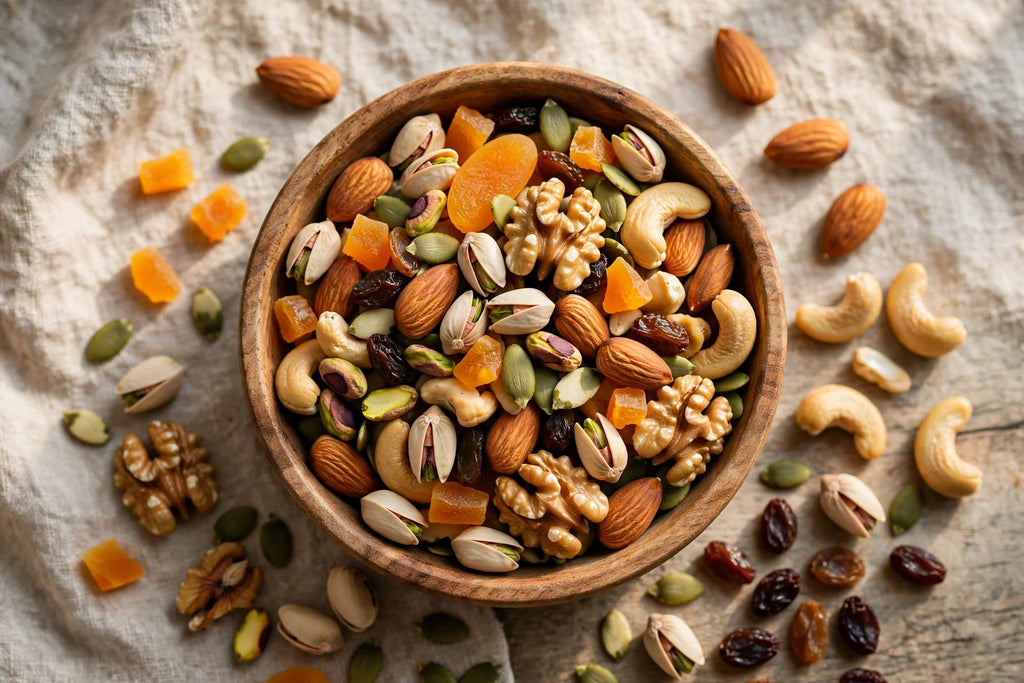
The Costed List: Two Glasses at Live Prices
Every price is the shop's own live price on 13 November 2026. The shake is costed by the amount used, from the verified pack price. Banana, milk and ice are bazaar-bought and are not costed here:
| Ingredient (Shopify store) | Pack price | Used in 2 glasses | Cost |
|---|---|---|---|
| American Badam | 250g Rs 1,100 | 30g (~20 almonds) | Rs 132 |
| Raw Kaju | 250g Rs 1,400 | 20g (~6 cashews) | Rs 112 |
| Desi Kishmish | 250g Rs 500 | 15g (small handful) | Rs 30 |
| Banana, milk, ice | — | 2 bananas, 400ml, 6–8 cubes | Bazaar, not costed |
| Total — 2 glasses (plain) | — | — | Rs 274 |
| Per glass (plain) | — | — | Rs 137 |
| Pista Giri — premium topping, optional | 250g Rs 2,750 | 15g, crushed, on top | Rs 165 |
| Per glass (with pista topping) | — | — | Rs 220 |
Rs 274 for two glasses is the shop-bought cost; the banana, milk and ice from the bazaar sit on top of it, at your own local prices. A juice-bar dry fruit shake in Lahore sells for Rs 400–600 a glass — this one is Rs 137, and you know exactly what went into it. A week's worth — one round a day, seven days — needs 210g of badam, 140g of kaju and 105g of kishmish: one 250g pack of each covers the week, for Rs 3,000 of shop stock, with the pista topping lasting far longer than the week.
Milkshake vs Doodh: When to Make Which
The milkshake is for the afternoon. It is cold, it is fast, and it is filling enough to be a snack — the glass to make when children come home from school, when guests arrive at noon, or when you want the nuts without the cooking. It is also the better drink for anyone who does not like hot milk: the cold and the banana hide the milk entirely, and the glass tastes of nuts and banana, not of doodh. Serve it in a tall glass with a straw, and it is a treat; serve it in a steel glass and it is breakfast.
The doodh is for the night. Hot, soaked, spiced — the doodh is the slow drink, the one that takes an overnight soak and is drunk warm before bed. It is the drink for cold nights and for dry skin, and it is the one the 9 November premix article and the badam doodh recipe describe. The two drinks share the nuts and nothing else: one is hot and soaked, the other is cold and blended raw. Keep both in the house — doodh at night, milkshake in the afternoon — and the nuts get eaten twice a day without anyone noticing.
Children. The milkshake is the easiest way to get dry fruits into a child who will not eat them plain. A child who picks the badam out of a plate will drink a shake without a word, because the banana and the cold do the persuading. One glass is a full snack for a child — nuts, banana and milk together — and it is a better after-school snack than biscuits or a packet of crisps. Do not add extra sugar for children: the banana and kishmish are sweet enough, and a sweet tooth trained on a shake with no added sugar is a sweet tooth that stays manageable.
Portions, Storage and Variations
Portion. One tall glass is a serving — about 350ml, with roughly 30g of nuts and a banana in it. Two glasses a day is plenty for an adult, and one is enough for a child. The shake is filling: nuts, banana and full-cream milk together are a small meal, not a drink to have alongside a meal. Anyone watching calories should count the glass as a snack and skip the sugar — the shake without sugar is already sweet, and the sugar is the only part of it that adds calories without adding nutrition.
Storage. This shake does not store. Drink it within ten minutes of blending: it separates, the ice melts, and the thick shake becomes a thin, watery glass. What does store is the prep — the dry fruits measured into a small jar the night before, so the morning round is milk, banana and blend. Do not freeze the shake and do not keep it in the fridge for later: a blended shake kept cold goes grainy, and the banana darkens. Fresh is the whole point; five minutes is the whole recipe.
Variations. Swap the banana for mango in summer and the shake becomes a mango dry fruit shake — same nuts, same milk, different fruit. Add a spoon of desi akhrot giri (Rs 1,000 for 250g) to the blend for a heavier, winter version, closer to the doodh family. Blend in a spoon of natural honey (Rs 500 for 250g) instead of sugar if the shake needs sweetening. Or leave the kishmish out and add a pinch of elaichi (Rs 4,200 for 250g) for a fragrant version without the raisin sweetness. Do not add chocolate or cocoa to this shake — the shop does not sell cocoa, and chocolate fights the banana instead of joining it.
Who should skip it. Anyone with a nut allergy should not drink this at all — badam and kaju are both tree nuts, and no version of this shake is safe without them. Anyone who cannot take milk should not substitute water: a water-based version is thin and gritty, and the shake needs the milk fat to carry the nuts. And anyone with diabetes should count the banana and the kishmish, not just the sugar — the shake has no added sugar, but it has natural sugars from the fruit, and a glass is a real portion of them.
How do you make a dry fruit milkshake at home?
Blend 2 ripe bananas, 30g badam, 20g kaju and 15g soaked kishmish with 400ml chilled milk and 6 to 8 ice cubes — milk first, ice on top, two thirty-second bursts. Two tall glasses, five minutes, no cooking and no soaking of the nuts. Serve at once, while it is cold and thick.
How much does a dry fruit milkshake cost per glass?
Rs 137 a glass in shop-bought dry fruits: badam Rs 132, kaju Rs 112 and kishmish Rs 30 across two glasses. Banana, milk and ice are bazaar-bought and not costed. With a pista giri topping, a glass is Rs 220.
Is a milkshake the same as badam doodh?
No. Badam doodh is hot milk with soaked badam, drunk warm at night. The milkshake is cold, blended raw with banana and ice, and drunk at once in the afternoon. They share the nuts and nothing else — the temperature, the method and the occasion are all different.
Can children drink a dry fruit milkshake?
Yes — it is one of the easiest ways to get dry fruits into a child, because the banana and the cold hide the milk and the nuts. One tall glass is a full after-school snack. Do not add extra sugar: the banana and kishmish are sweet enough.
Can I make the milkshake without banana?
You can, but it will be thinner and less sweet — the banana is what thickens the shake and sweetens it without sugar. Without banana, add an extra 10g of kaju for body and a teaspoon of honey, and expect a thinner glass that separates faster.
Blend Your Milkshake: Order from Khan Dry Fruits — American badam 250g (Rs 1,100), raw kaju 250g (Rs 1,400) and desi kishmish 250g (Rs 500): one pack of each covers a week of shakes. Delivery across Pakistan. Browse the News blog →
Related: How to Make Badam Milk (Badam Doodh) at Home · Dry Fruit Doodh: Badam Doodh Recipe + Dry Premix Jar · Sardai: The Winter Almond Drink, Made at Home


